2022
The Hague University of Applied Sciences
Research, Ideation, Concept, 3D Modeling
UX/UI Designer, Tech Lead
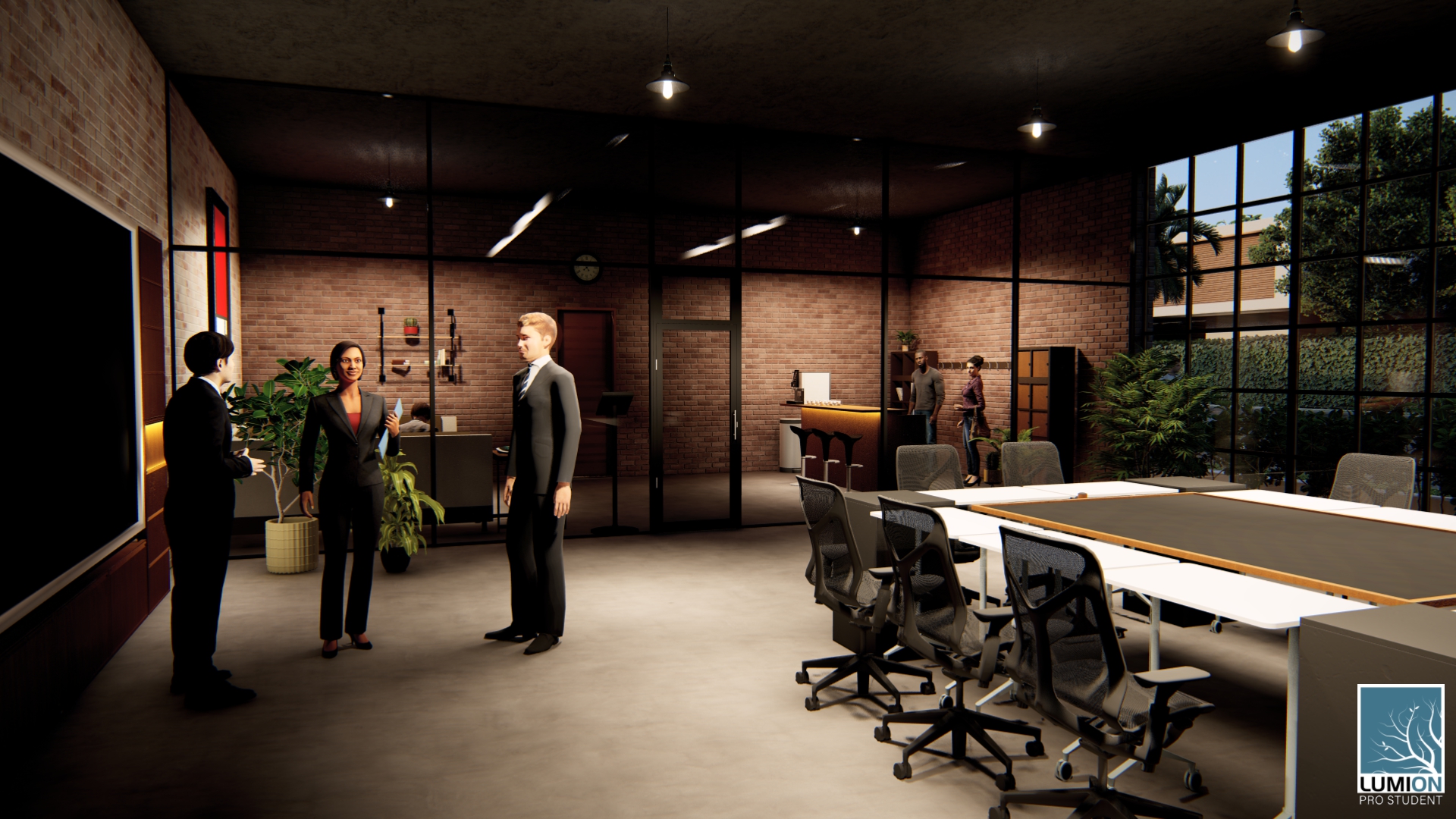
Despite the initial assignment focusing on the space, we quickly realized that we have to design the interactions within the space, and not just space around interactions.
The existing citizens' assemblies are often facing two main issues: One is low participance due to citizens not seeing any of their ideas carried out by the government, leaving them feeling unheard. Another problem is that these citizens' assemblies provide ideas that are either too costly, or cause too many consequences for the governing body. To better facilitate this communication, me and my design team were tasked to focus on the process and how we could streamline the citizens' assemblies to the government.
Our solution to this problem was to provide all the tools necessary to a smaller group(s) of citizens in a connected ecosystem. Current citizens' assemblies consist of roughly 150-200 participants. We decided to narrow it down to 10 participants, which would allow for much deeper and more informed conversation.

UX research, UX Design, Tech Lead, 3D Modeling
Initial research focused on better understanding user’s needs related to multiple focus areas such as how should the space be, what tools are needed or what structure should the individual sessions follow
How can technology help facilitate creativity and collaboration?
What is the current state of citizens' assemblies?
How a workspace is designed (facilitating productivity, collaboration, and ideation)
Analyze current Wijkagenda (neighborhood agenda) to learn about topics discussed
The initial research revealed multiple underlying issues - people not feeling heard or long sessions that can spread over months without engaging in deeper conversations. Most importantly, government is only legally obliged to the solutions of Citizens' Assembly if it initiates them.
Our design team found important technology that could help facitilitate these smaller sessions and not only make them more tangible, but also more fun. The amount of information covered during the research gave some very important directions for further ideation and designing.
The research materials are available here.
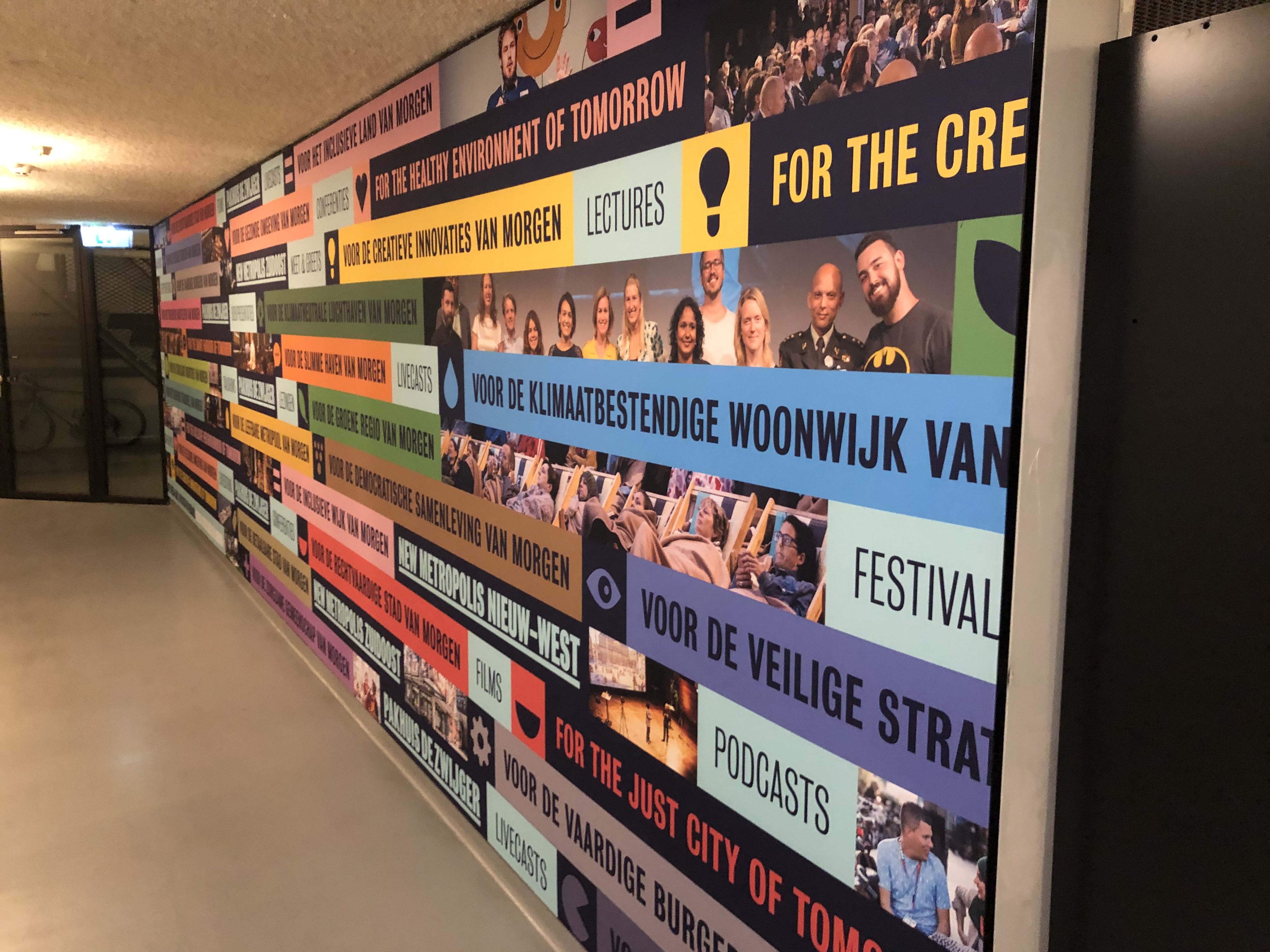
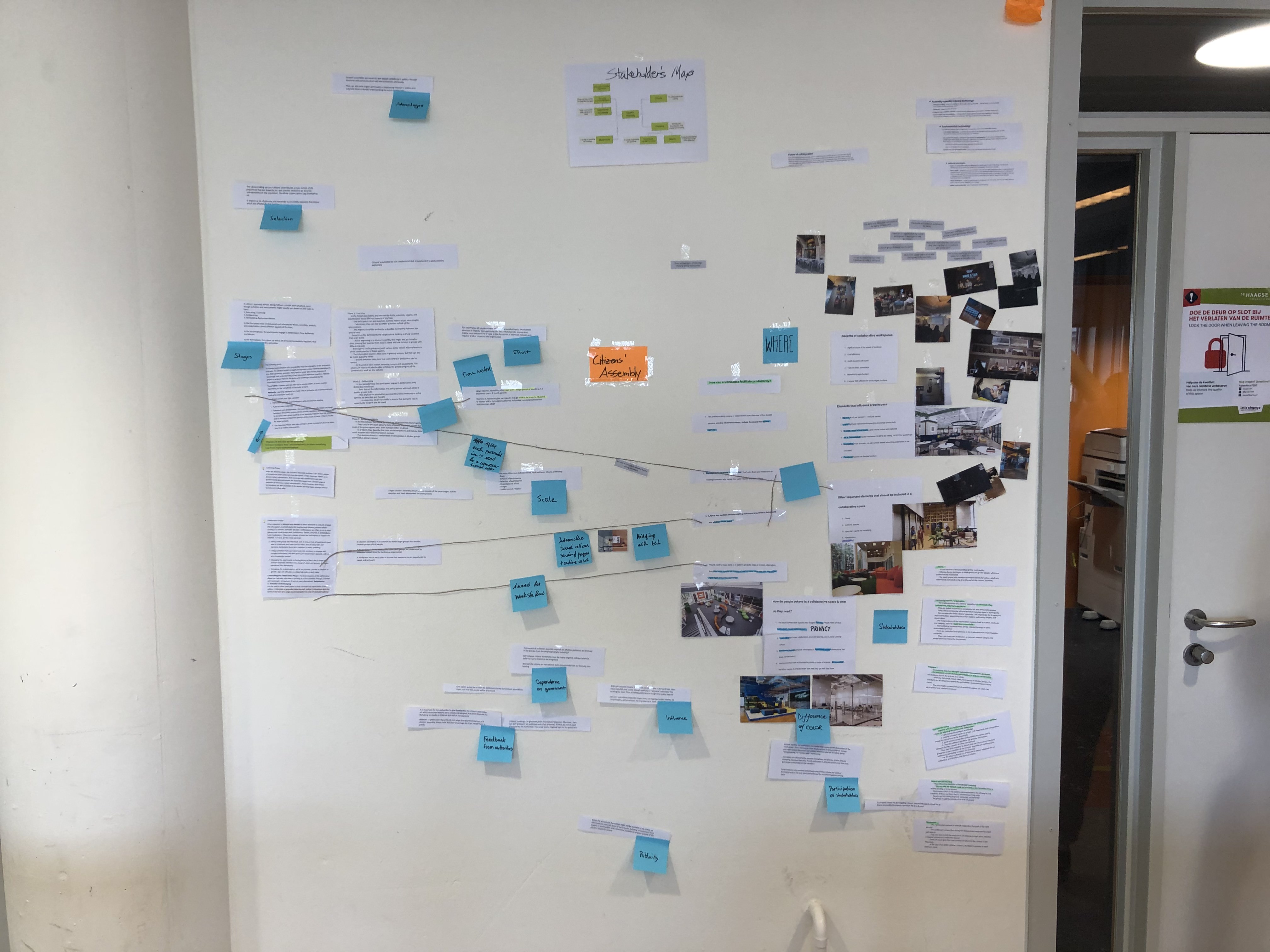
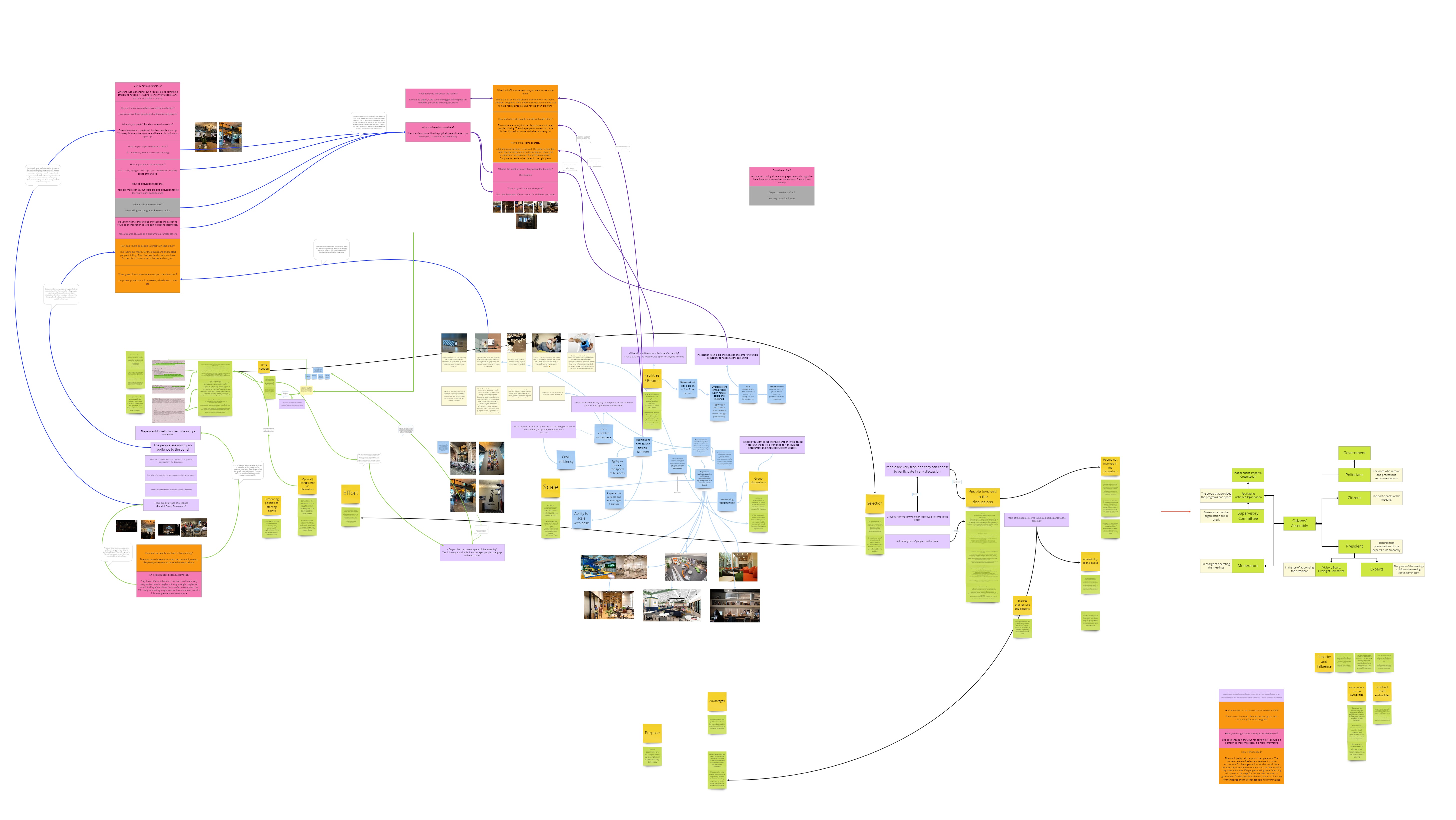
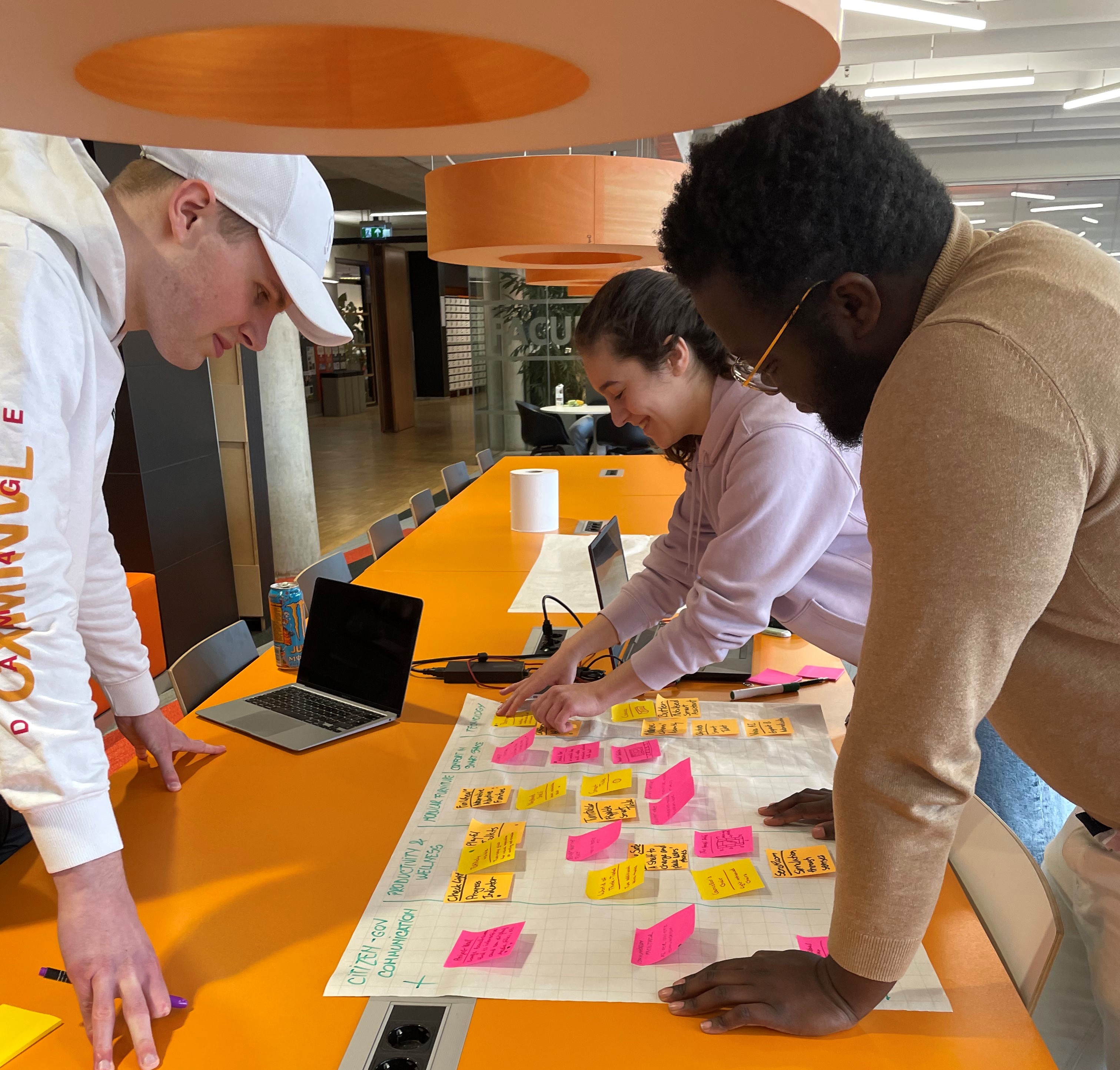
After learning all of these findings, we had to put them together cohesively to find underlying patterns and learn which focus areas require further investigation. That's why we used the method "Synthesis Wall", to create phyiscal links between insights and findings to grasp the core concepts of each focus area.
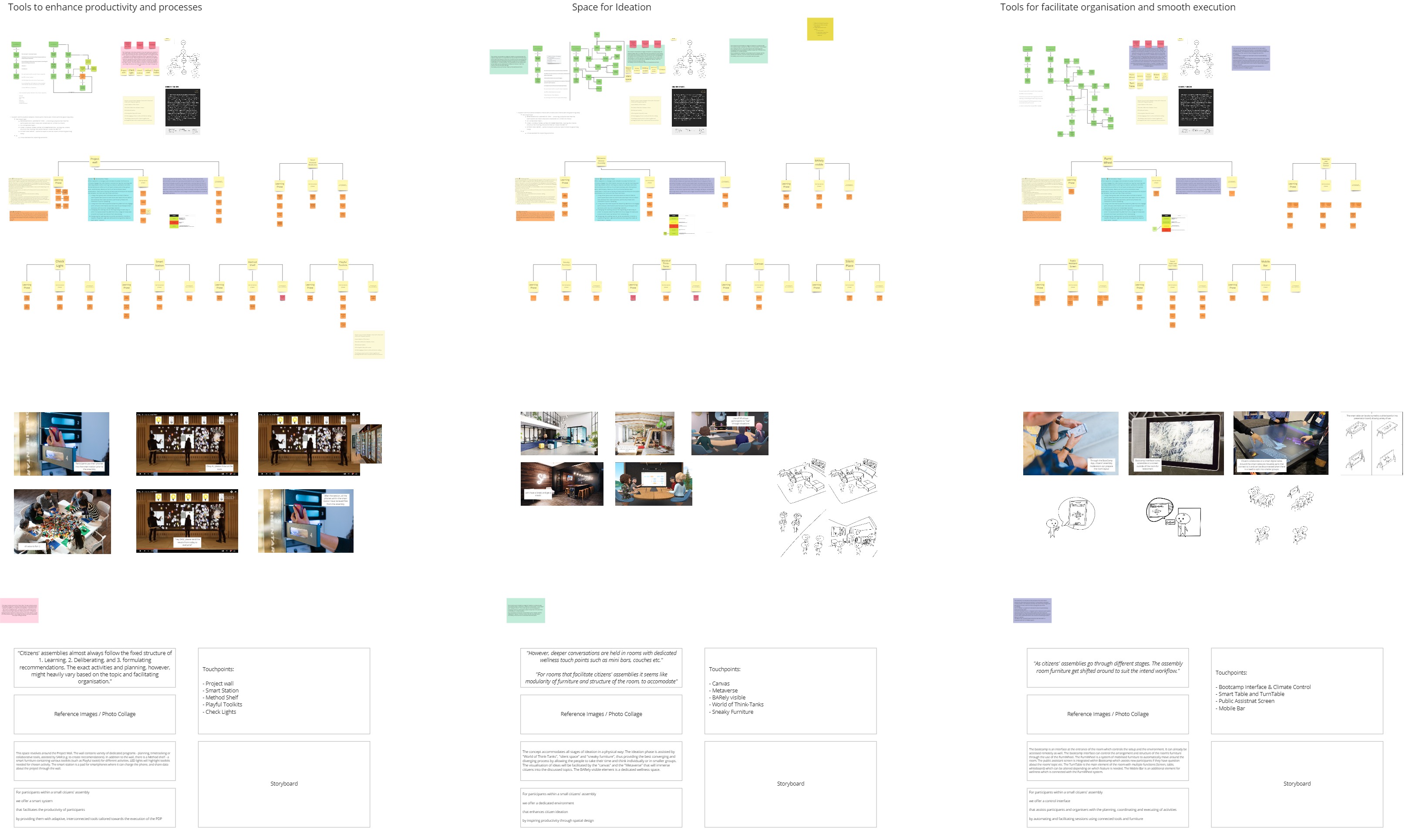
To kick-off the design process, we diverged as a team, with every member creating 5 individual concepts. This gave us a total of 25 concepts that would follow HMW questions and research insights. We would then converge these concepts into more cohesive ones, and after presenting them to the client, narrow it down to the final concept.
Before starting the ideation, we decided to analyze all the data from synthesis wall and come up with the main insights of the research that would support and lead our design decisions.
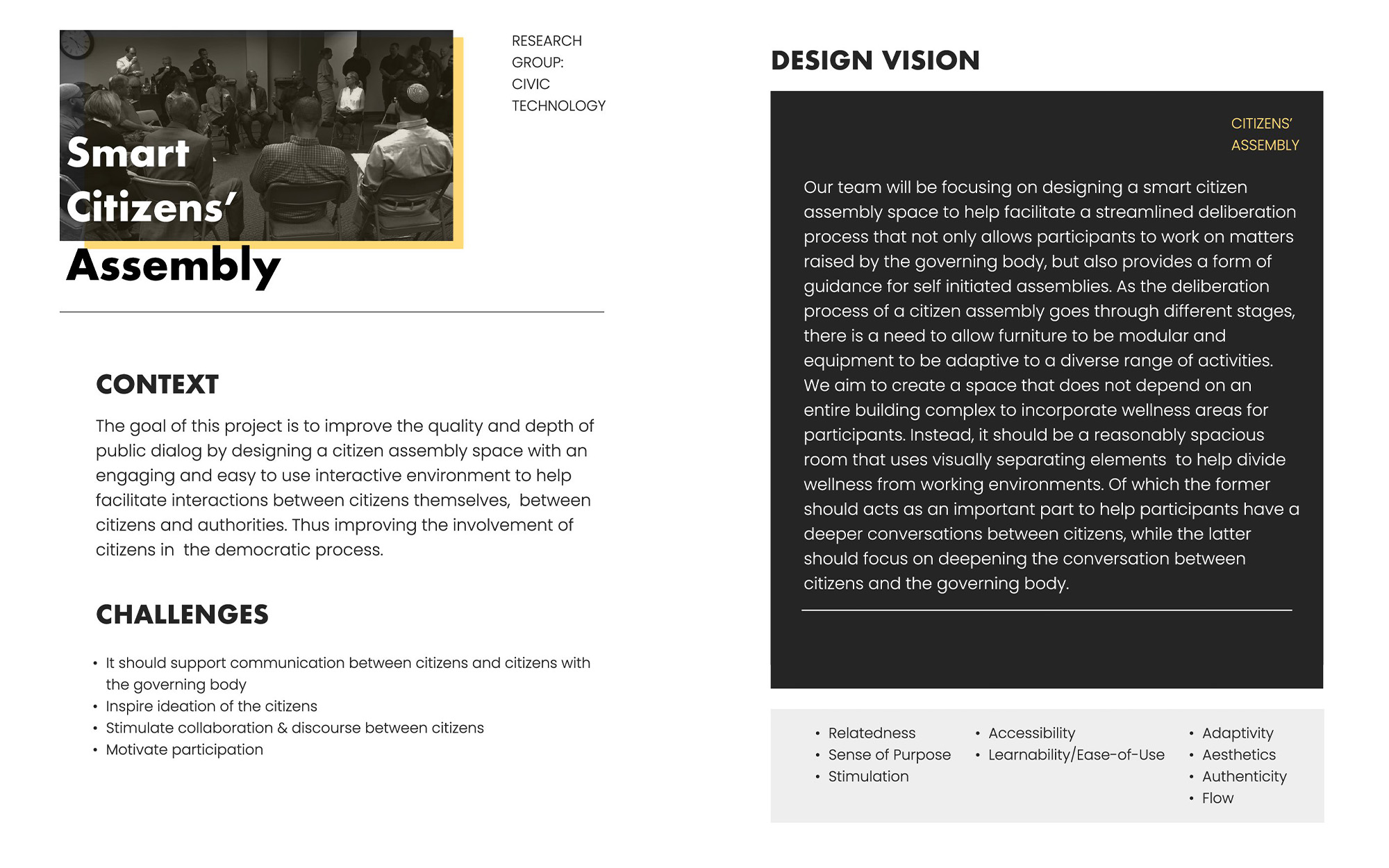
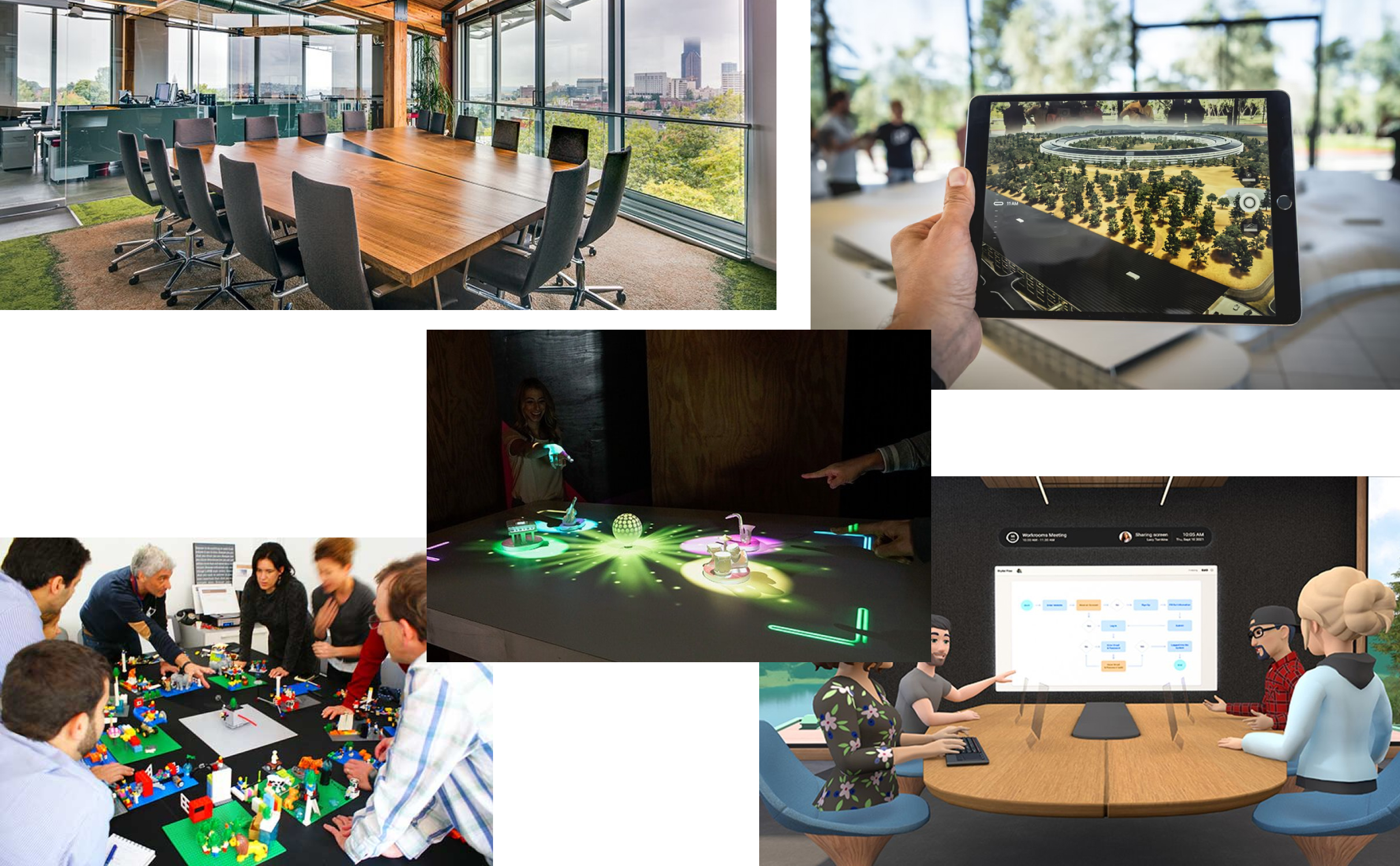
For my individual concepts, I decided to use my knowledge of technologies to come up with cool, futuristic ideas that would suit the citizens' assembly space. I also added reference pictures to better capture the desired visual/inspiration.
After seeing all individual concepts, we used our custom method called "Cross box", where we tried to link all the concepts with logical connections. In the end, we came up with three final concepts that were then presented to the client.
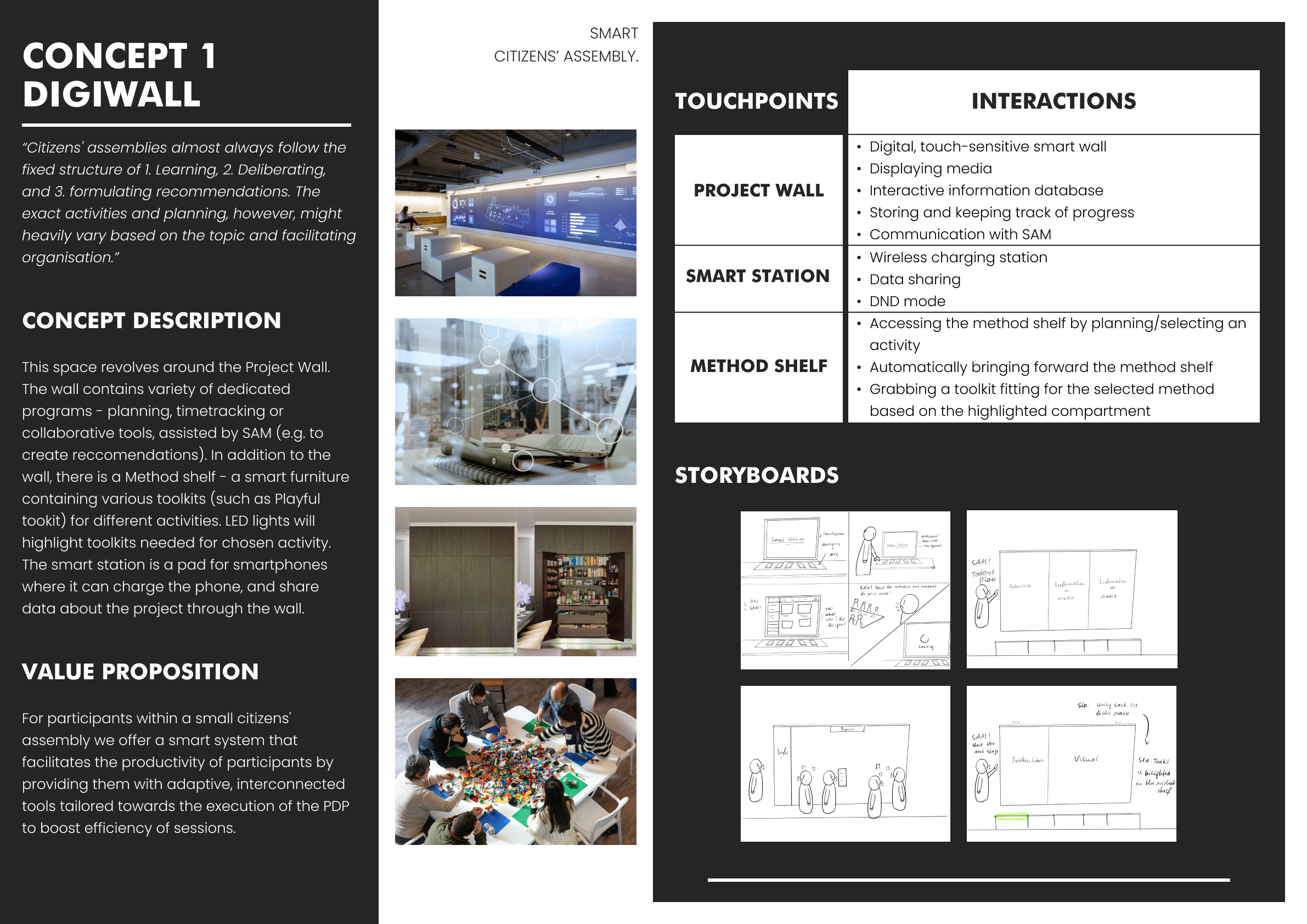
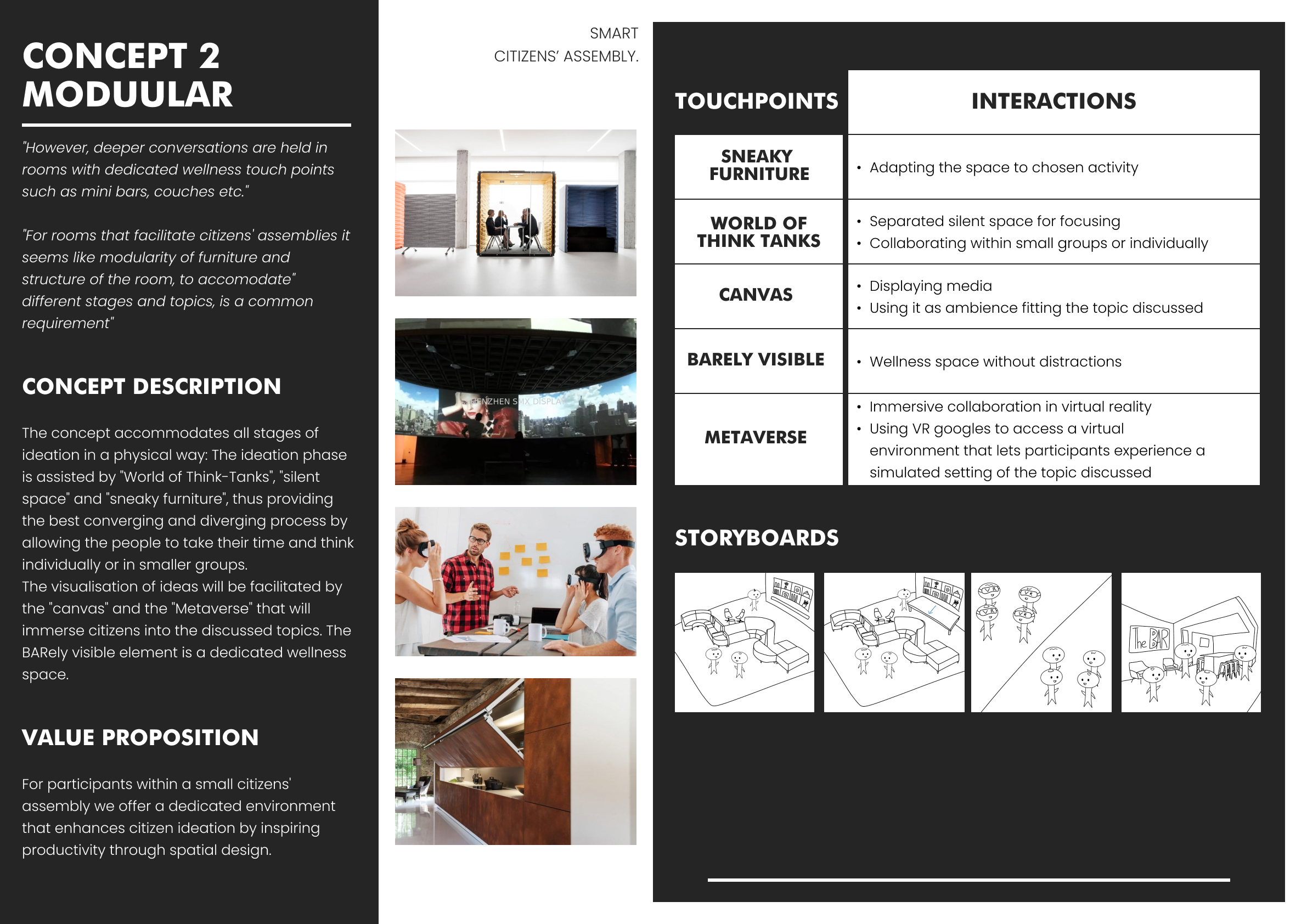
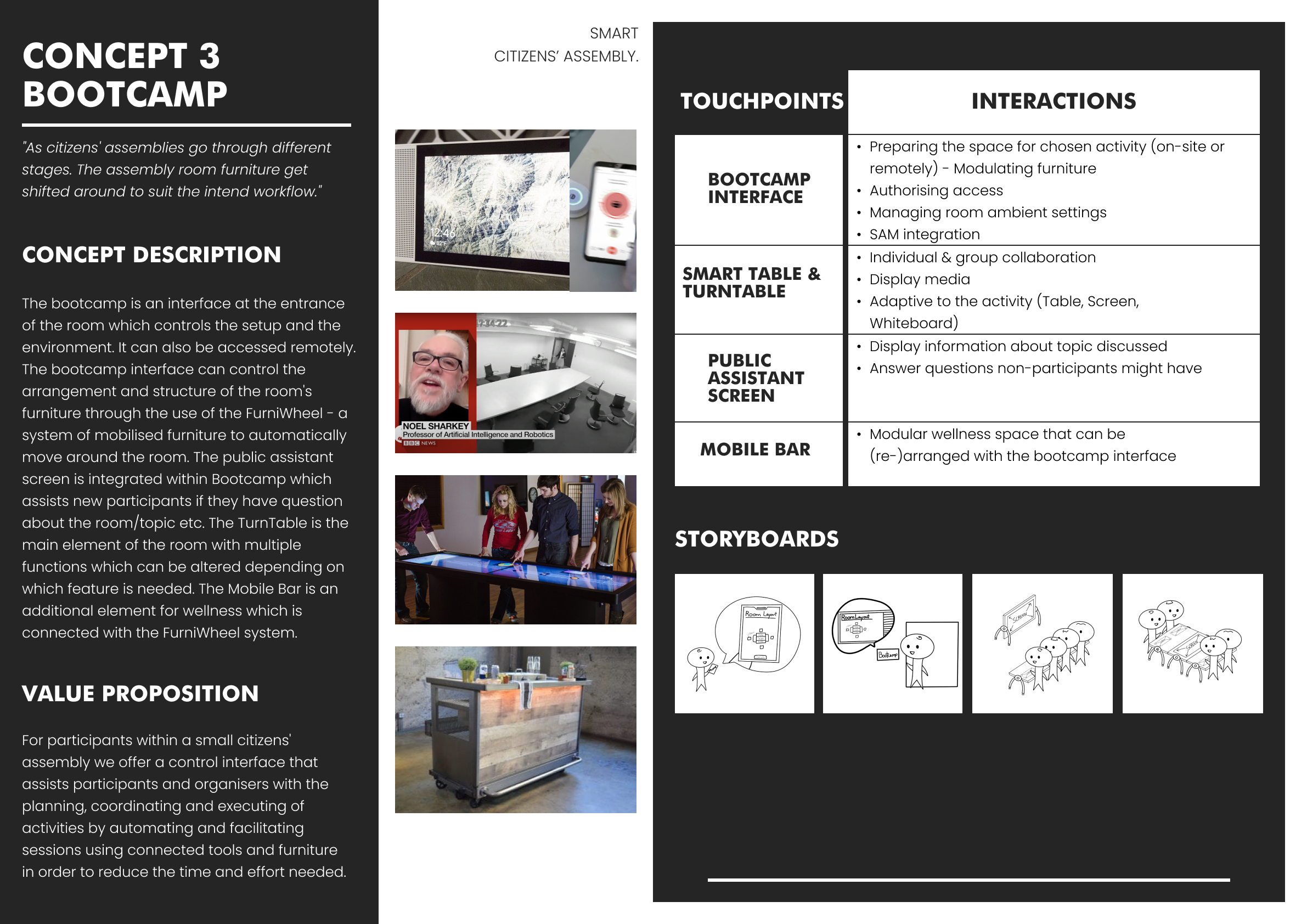
After the client presentation, we had a clear direction of what the final design would have in terms of touchpoints, as well as first couple of layouts. That's why we decided to create a paper prototype so that we could then test out not only the touchpoints, but also the layouts of the room themselves.
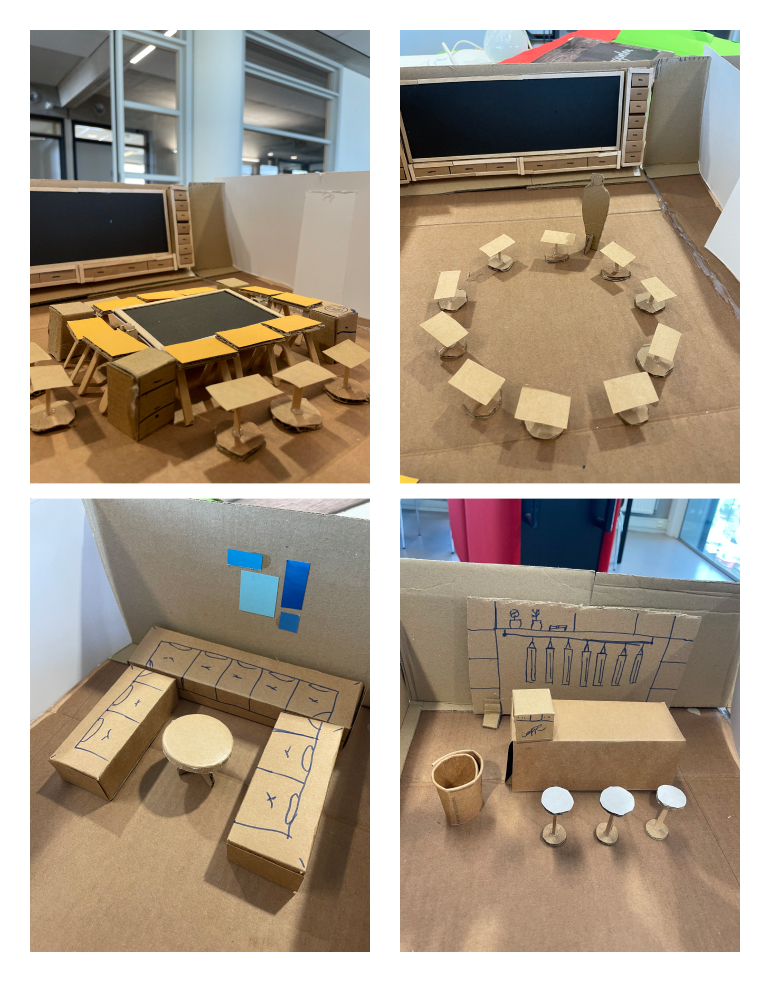
After making paper model we also used simple 3D tool to illustrate the space better. After that, we tested it with users and changed the space/flow of the whole process based on if they missed a touchpoint or were confused by an interaction.
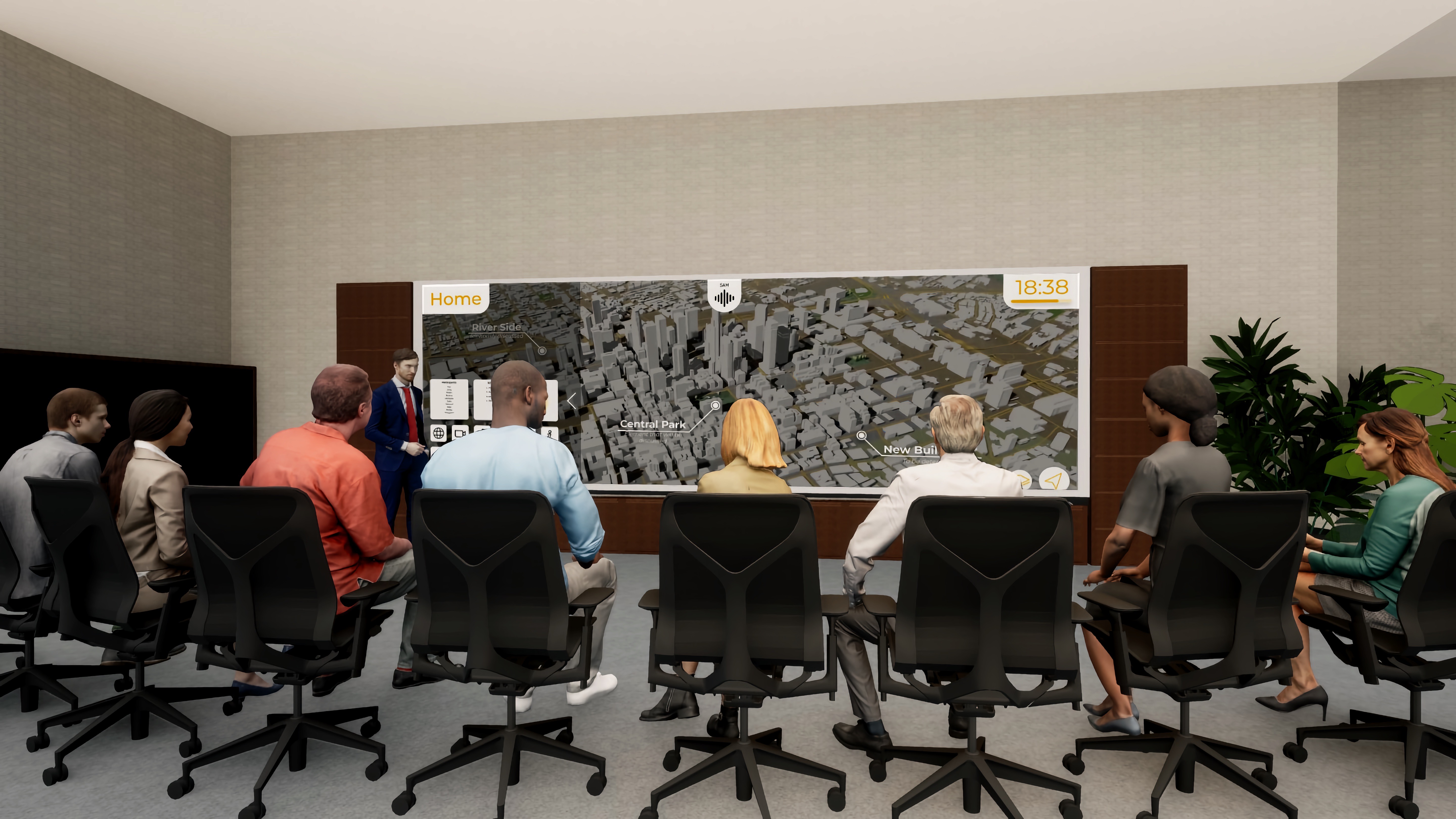
For the final design, we refined all the remaining touchpoints and created a video presentation for the client. The aim of the prototype is to be understandable for people without knowledge of citizens' assemblies, as well as showing clear solutions to existing problems. I created the video, and helped with writing the narrative of the whole process.
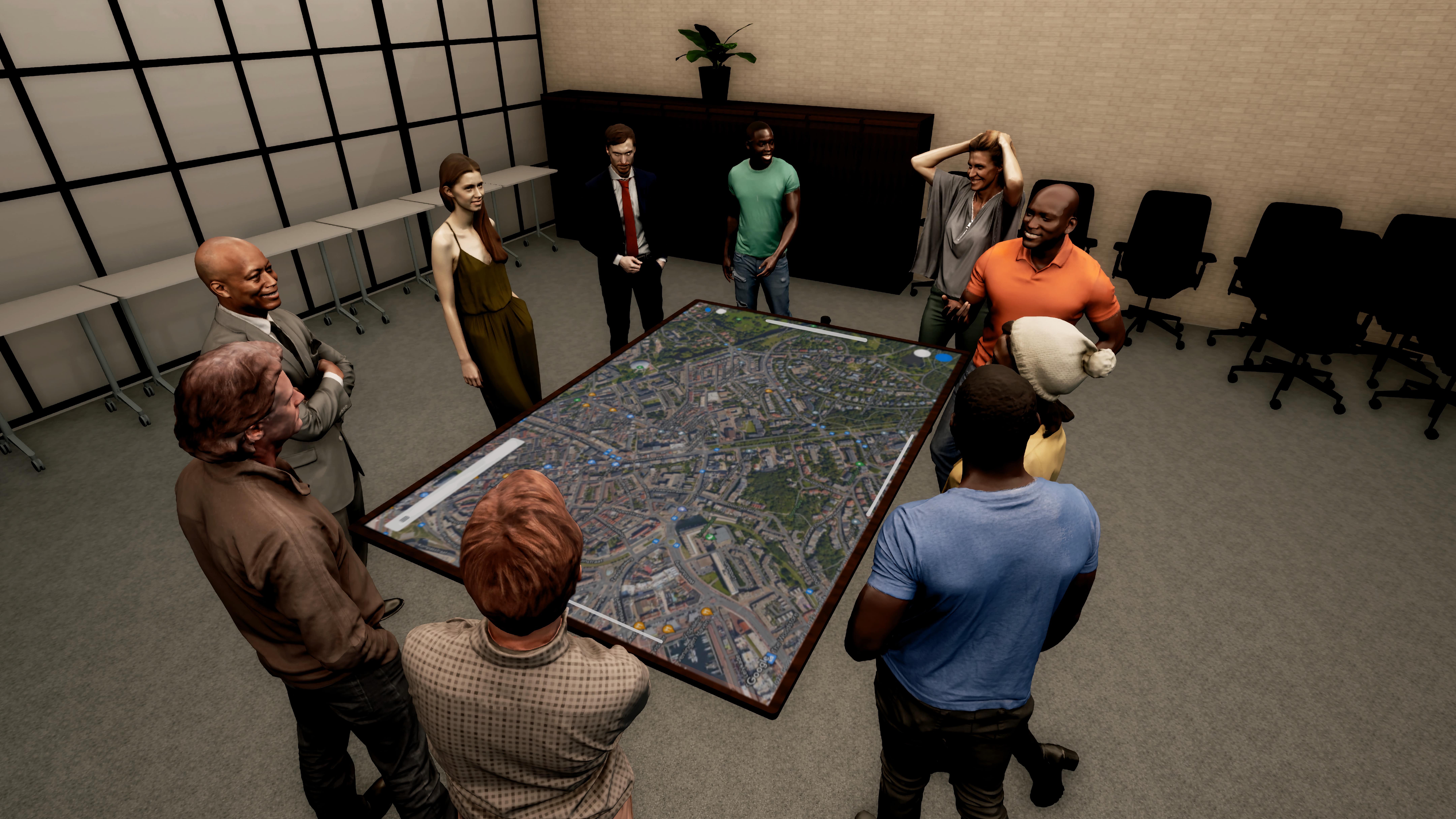
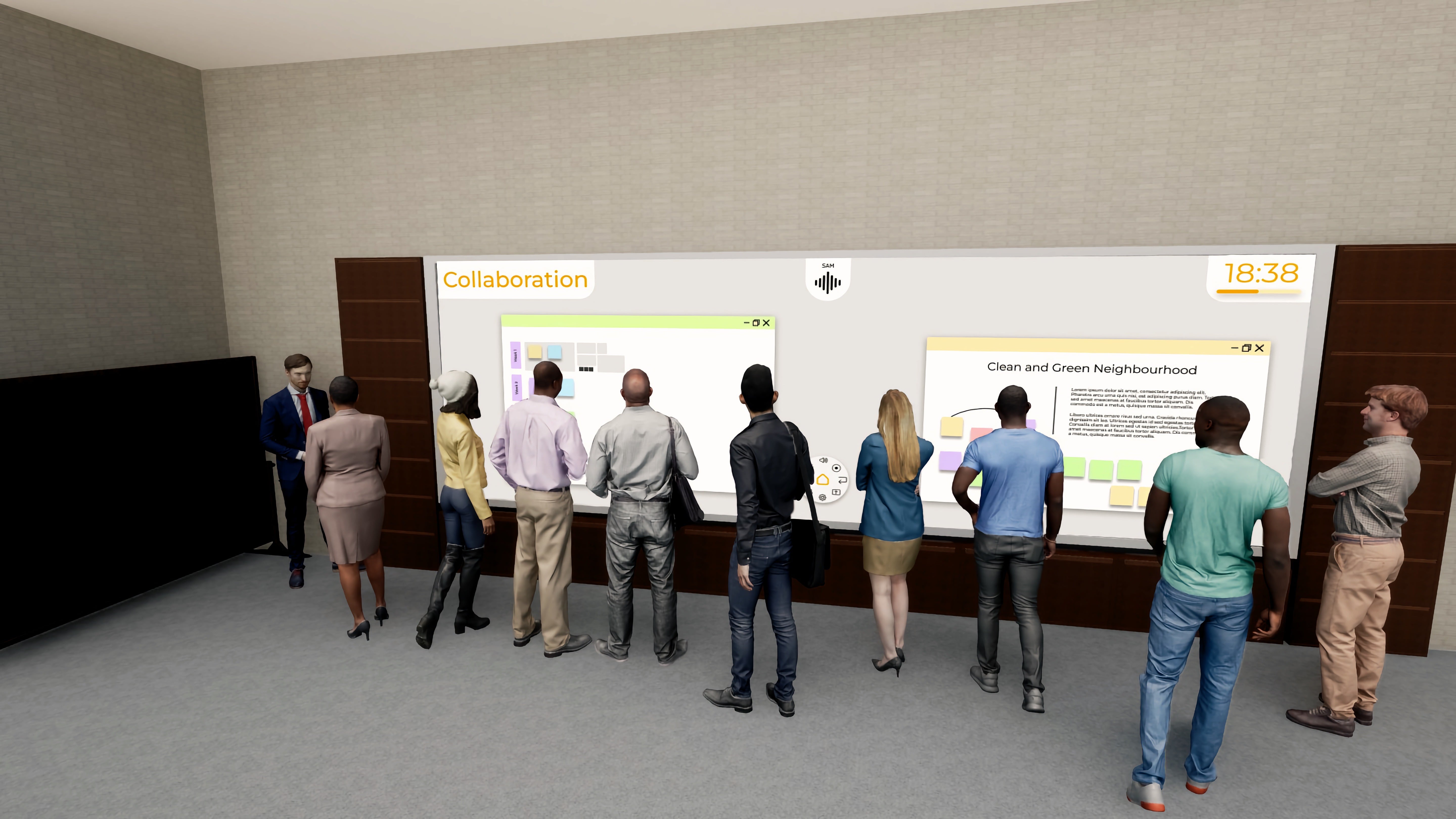
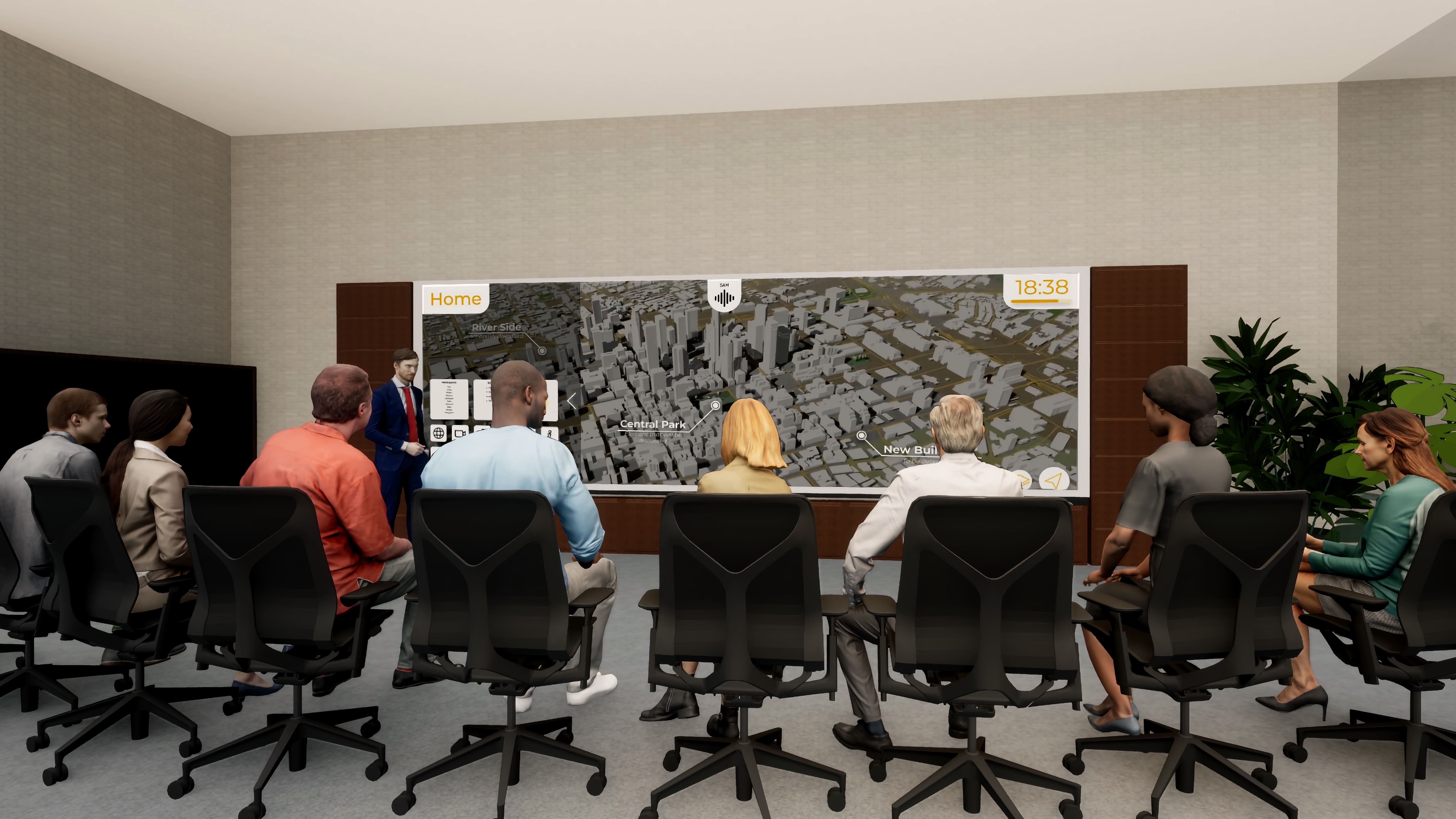
Our solution is truly one of a kind. It combines the needs of government to get citizens' opinion on important topics, and provide all necessary tools for the citizens to fully focus and have a good working environment. Since these citizens' assemblies usually happen after work hours, we also included a wellness area where they can chat, grab a snack or charge their phone. We took into consideration all the aspects of the space and designed it with users in the center of it.
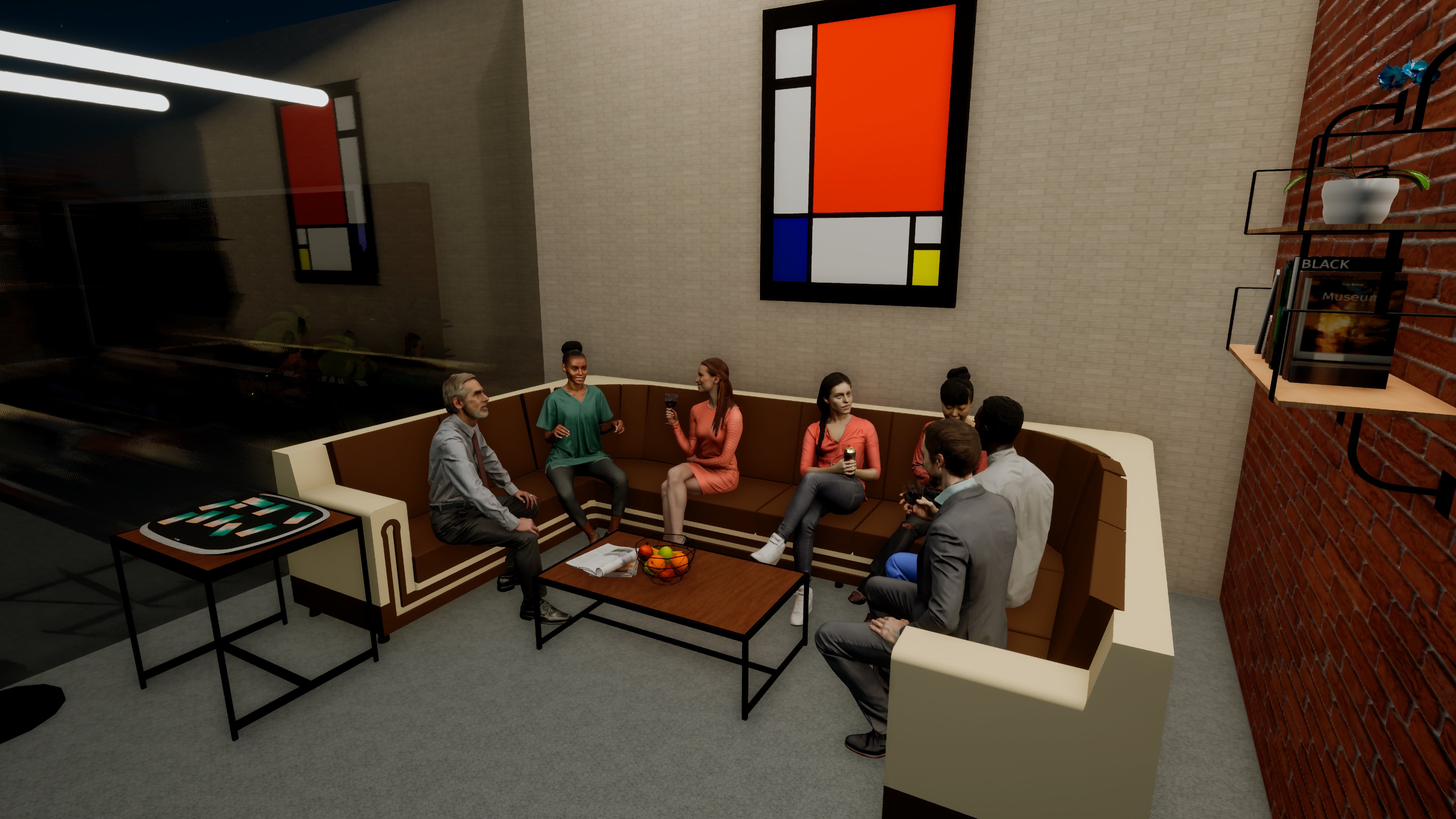
Streamlines citizen-government communication
Combines wellness area with dedicated work area
Provides tools for various deliberation processes
Utilizes Smart Assistant to automize and make tasks easier.
Bringing the solution of today, with easy-to-scale technology of the future